Solar-control coatings
Special coatings change how radiation is transmitted and reflected. They reduce solar energy entering while retaining daylight.
Our range / Windows
Standard glazing transmits some solar energy and reflects or absorbs the rest. Solar-control windows use glazing selected to reduce indoor heat gain more effectively. Their key measure is the g-value: the lower it is, the less solar energy passes through the glass into the room. We also assess daylight levels, window orientation and glazing area when choosing.
Application
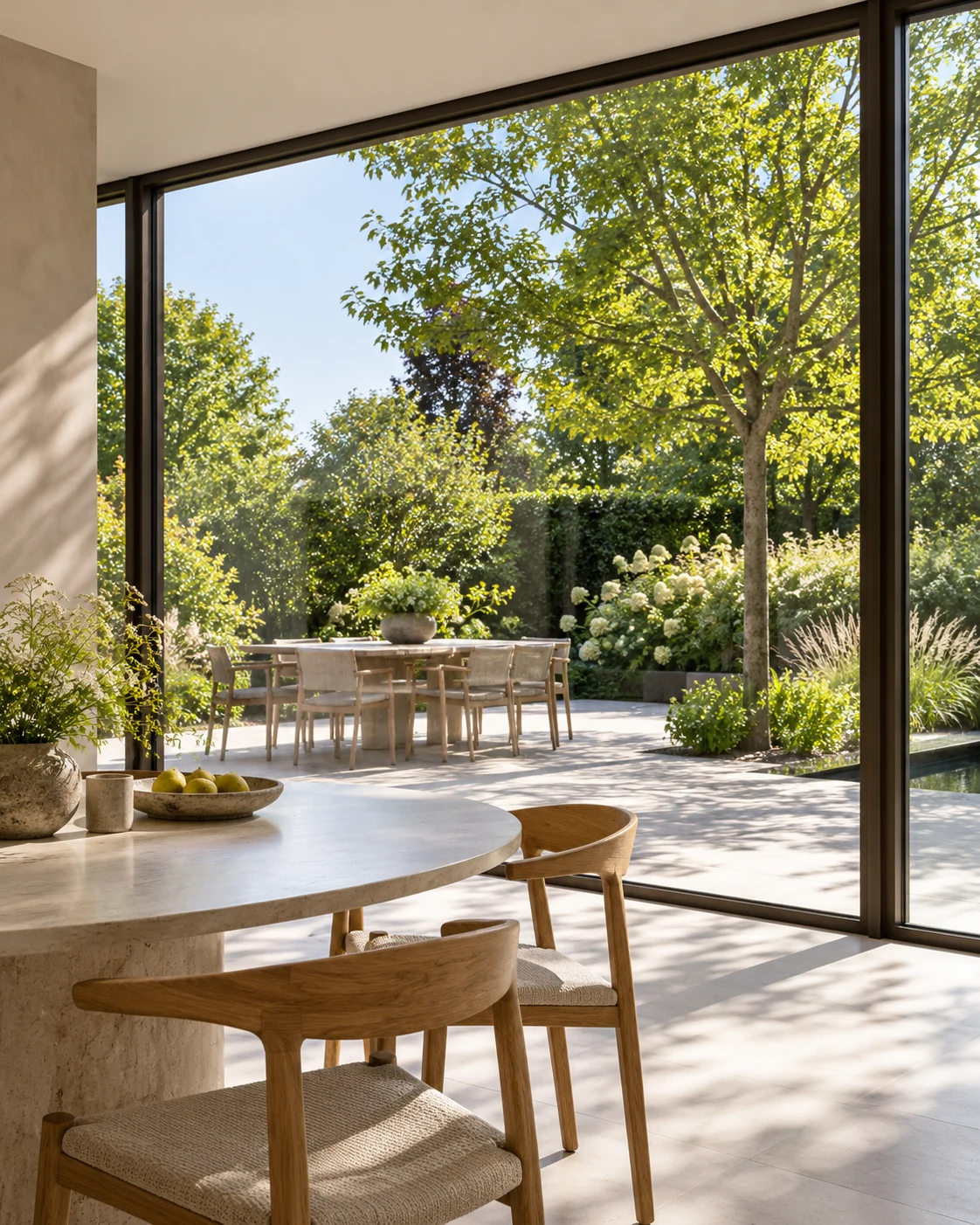
We consider orientation, glazed area, shading from neighbouring buildings and how the room is used. A large west-facing window may need different glazing from a small window on the north façade.
We plan solar protection alongside the building’s other elements. External shading, ventilation and cooling affect indoor temperature. Suitable glazing helps reduce solar heat gain, but cannot by itself guarantee a particular temperature on a hot day.
Special coatings change how radiation is transmitted and reflected. They reduce solar energy entering while retaining daylight.
Options differ in transparency, tint and reflectivity. We match the appearance to the façade and your expectations for the view from inside.
Solar-control glazing can be combined with thermal or acoustic insulation solutions. We account for dimensions, weight and system capabilities in the final configuration.
Before choosing
Questions before buying
No. Glass with a relatively neutral appearance is also available. However, products differ in tint, reflection and light transmittance. Compare specifications and samples when choosing.
Not in every situation. Glazing reduces incoming solar energy, while shading and cooling serve additional functions. For large glazed areas, the choice should be based on the design and conditions of the room as a whole.
There is no need to do so. We can suggest different glazing for a façade with strong sun exposure and for areas where maximum daylight matters more. We also consider a consistent external appearance of the glass.
Material and construction
Explore the available systems and construction options. We determine the required performance for the specific construction.
Talk to us
We will check your windows' orientation and dimensions and compare glazing options. Book a free measurement visit.